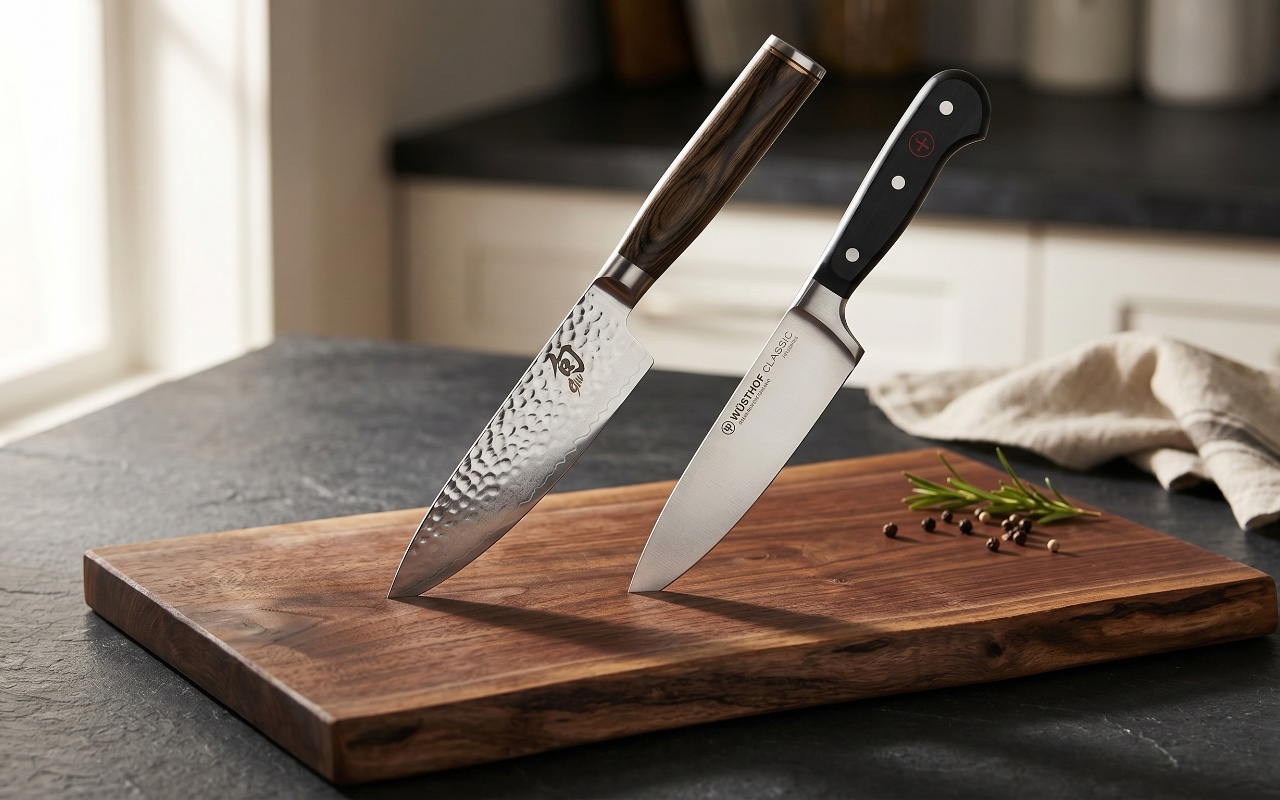
The Best Personalized Kitchen Knife Gift — How to Choose, Engrave & Impress
Which Knife to Buy — and Why Does It Even Matter?
Choosing a kitchen knife sounds like it should take five minutes. It doesn't. The moment you start looking, you're drowning in German steel versus Japanese steel, HRC ratings, bolsters, Pakkawood handles, and forum arguments that have been going since 2009. It's overwhelming — and that's before you factor in that you want to put a laser on it.
A personalized kitchen knife is one of those gifts that actually gets used — every single day, for years. Not put in a drawer. Not re-gifted. Used, appreciated, and remembered. This guide is here to help you choose the right one — the right steel, the right price, the right knife for the person you have in mind.
Two Schools of Knife-Making — Two Different Jobs
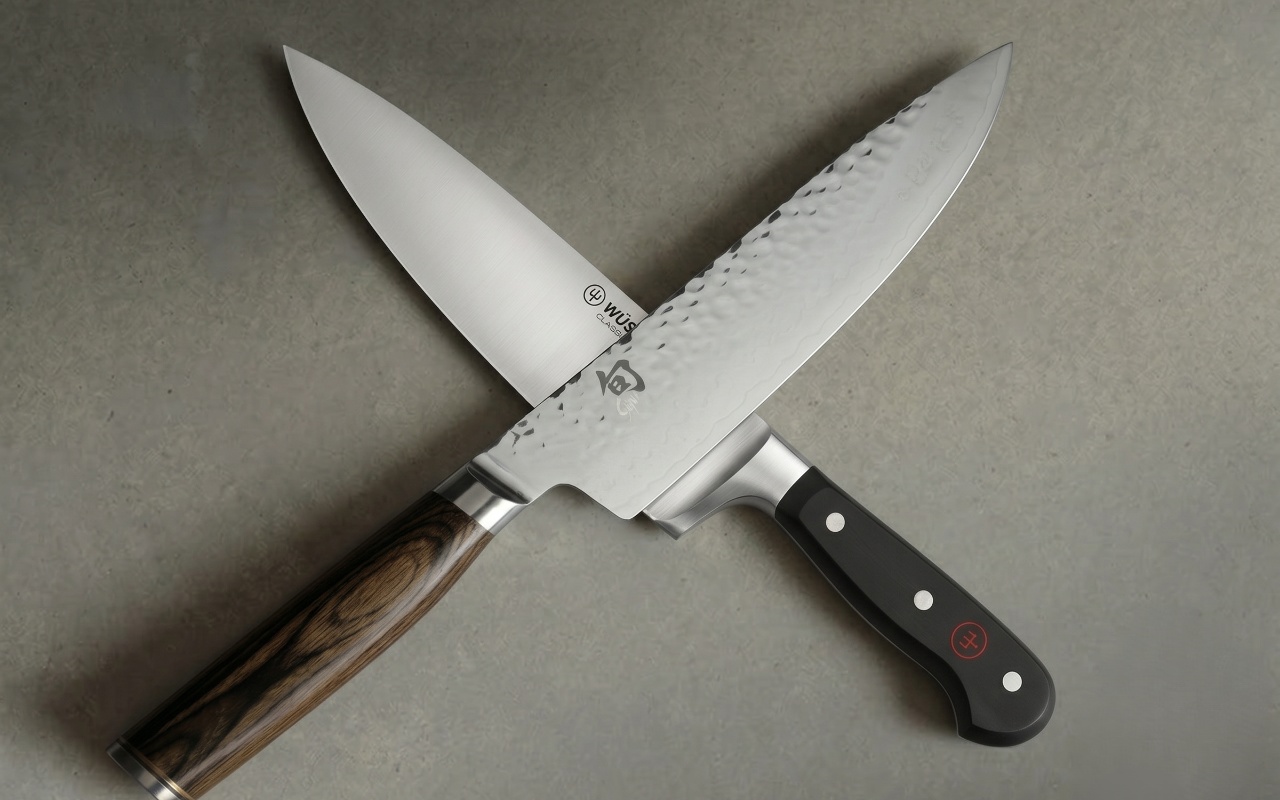
Walk into any kitchen knife section — online or in a shop — and you’ll run into two very different philosophies about what a knife is supposed to be. Understanding the difference matters both for choosing the right gift and for understanding how each type behaves under a laser.
- German knives are built to take punishment. A typical German chef’s knife uses a slightly softer steel that bends rather than chips when it hits a bone or a frozen crust. The blade is thicker and heavier, and the edge is ground at around 20 degrees per side. These knives last for decades with minimal fuss. The big names here are Wüsthof and Zwilling.
- Japanese knives are built for precision. The steel is harder, which means it holds a much sharper edge for much longer. Japanese knives are ground thinner — often at 10–15 degrees per side — and that edge glides through food in a way German knives simply can’t match. The catch is that harder steel is more brittle; try to split a chicken carcass with a Japanese knife and you’ll chip the edge rather than power through it. These knives also need proper sharpening — whetstones, not a drawer sharpener.
For gifting and personalizing, the practical difference is this: if you’re buying for someone who just cooks at home and doesn’t want to think about maintenance, German is the right choice. If you’re buying for someone who’s already talking about their knife collection and has opinions about their cutting board, Japanese is the right move. If you don’t know — German. It forgives more.
Which Knives to Actually Buy
Here are the knives worth buying — whether you’re gifting one, engraving one yourself, or building a product line around them. Organized from budget to premium.

Wüsthof Classic 8” Chef’s Knife — The German Standard
If there’s one knife that defined what a chef’s knife is supposed to be, it’s this one. Wüsthof has been making knives in Solingen, Germany since 1814, and the Classic 8” hasn’t changed much because it doesn’t need to. Precision-forged, full bolster, POM handle that’s triple-riveted and balanced exactly right. It’s heavier than most Japanese knives and that weight is the point — the blade does the work. A single personalized Wüsthof Classic is the kind of gift someone keeps on their counter and uses every day for the next twenty years.
For personalization, the blade is the canvas. Clean CerMark lettering on a Wüsthof blade looks genuinely premium — like something you’d see in a high-end gift shop at double the price.

KAI Shun Premier Tim Mälzer Minamo Santoku — The Collector’s Choice
This is the knife that turns heads when it comes out of the box. KAI and renowned German chef Tim Mälzer collaborated on the Minamo line — “Minamo” means the surface of water in Japanese, a reference to the hammered (tsuchime) finish covering the blade. That texture isn’t just visual: it reduces food sticking during cutting the same way dimples reduce drag on a golf ball. VG-MAX steel, ground at 16 degrees per side, holds an edge longer than any German knife at this price.
For someone who already has opinions about knives — this is the gift that surprises them. The hammered blade with a personalized name is a combination that no gift shop has on the shelf.

Wüsthof Performer 5-Piece Set — The Complete Kitchen Upgrade
When the gift isn’t for one knife — it’s for a whole kitchen. The Performer is Wüsthof’s modern line: same Solingen steel and precision forging, but with a lighter polymer handle (glass fiber-reinforced, with a distinctive hexagon grip texture) and a cleaner contemporary look. Five knives covers every task someone will have in the kitchen for the next decade. As a gift, this is the kind of thing people open and then clear out their old knife block entirely. For personalization, a full matched set with the same name or date engraved across all five blades is something no shop carries off the shelf.

Shun Classic Blonde 8-Piece Set — Japanese Precision, Complete
Shun is the knife brand serious home cooks graduate to when they decide they want something better. The Classic Blonde uses VG-MAX steel at 16 degrees per side — razor sharp, stays that way, handles serious daily use. The “Blonde” distinction is the handle: lighter natural Pakkawood instead of the standard dark version, which gives the whole set a warmer, more distinctive look. Eight pieces means the recipient has every knife they need for the next decade in a style that doesn’t look like everyone else’s kitchen.
Pakkawood handles take a laser mark well, which means personalization options here are genuinely interesting. A name on the blade and an initial on the handle is something a dedicated knife gift service would charge significantly more for.

Nesmuk Exclusive Damascus Walnut — The Statement Gift
Nesmuk is a small knife maker from Solingen that most people have never heard of — which is exactly why this is the right gift for someone who knows knives. This is not just a tool; it is a masterpiece of metallurgy and a true investment piece. The Damascus blade is forged from 400 layers of steel, creating a unique, flowing wave pattern that serves as a fingerprint of the master blacksmith who created it.
Owning a Nesmuk Exclusive is akin to owning a piece of functional art. It is the absolute pinnacle for the collector who demands the finest materials and an edge that defies common standards of sharpness. This is the kind of gift that marks a milestone in life — a legacy item that will be passed down for generations, retaining its story and its soul long after it leaves the box.
If you’re buying a knife as a gift and you found what you needed — great, go order it. But if you want to personalize it yourself (engrave a name, a date, a message), the next few sections are for you. And if you’re already thinking “wait, could I actually sell these?” — there’s a section for that near the end. We’ve got all three of you covered.
Want to Add a Name Yourself? Here’s What Works on a Knife
If you’re ordering a knife and want someone to personalize it — or you’re doing it yourself — this part matters more than most people realize. Not every surface on a knife takes engraving well, and a couple of handle materials are genuinely dangerous to put near a laser. Worth knowing before you hand a knife to anyone and ask them to "just put a name on it."
When adding a personal touch to a knife, you have two options: mark the blade, or engrave the handle. The blade is almost always the safer and better-looking choice. A clean dark mark on polished steel looks premium and lasts for decades. The handle depends entirely on what it’s made of.
Wood handles (olive wood, walnut, rosewood, maple) engrave beautifully. The laser burns the surface like it would on a cutting board — warm, natural, and unique to each piece. If the knife you’re buying has a real wood handle, you can personalize both the blade and the handle for a gift that looks truly custom.
Pakkawood — used on Shun, Miyabi, and similar Japanese-style knives — looks like real wood but is a composite material. It can be engraved and looks good, but requires proper ventilation during the process. Worth knowing if you’re asking someone to do it for you: make sure they have proper extraction equipment, not just an open window.
Plastic and composite handles (G10, Micarta, textured synthetic) can be marked, but results are flat and low-contrast. The blade is a much better canvas on knives with these handles.
Three handle materials that should never be engraved — and what to watch out for when ordering personalization:
- PVC and vinyl coatings — releases toxic gas when heated. If a cheap knife has a rubbery, flexible handle and no clear material label, it may be PVC. Any reputable engraver will refuse to touch it — and rightly so.
- Teflon or non-stick blade coatings — some budget knives have dark non-stick coatings on the blade. These cannot and should not be laser marked. The coating releases harmful gases and the result looks terrible anyway.
- ABS plastic handles — common on very cheap knives. Not safe to engrave. If you’re buying a knife specifically to personalize, avoid anything suspiciously cheap with an unlabeled black plastic handle.
The simple rule: buy a knife from a known brand (Wüsthof, Shun, KAI, Nesmuk), confirm the handle material with the seller, and you’ll have no issues. The knives listed in this guide are all safe to personalize on the blade, and several work well on the handle too.
How Laser Personalization Actually Works (So You Know What You’re Paying For)

Most people assume a laser just burns directly into the metal like it would on wood. It doesn’t. Stainless steel reflects a laser beam almost entirely — without help, nothing happens. To get a permanent mark on a knife blade, a thin coating called a marking compound (most commonly CerMark) is sprayed onto the surface first. The laser fires through it, bonds the pigment permanently to the steel, and the excess washes off with water. What’s left is a clean black mark that’s part of the blade — not a sticker, not paint, not ink.
This matters if you’re ordering a personalized knife from someone: a properly done laser mark won’t scratch off, won’t fade in the dishwasher, and won’t peel after a year of daily use. If someone offers to "engrave" a knife on the cheap using a basic engraving pen, that’s a different process entirely — and the result looks and lasts accordingly.
For those doing it themselves: CerMark Ultra is the industry standard and worth the price. Brilliance Laser Inks are a good alternative with easier cleanup. Both produce professional, permanent results on stainless steel when applied correctly. A useful tip in LightBurn: enable Dynamic Power so the laser reduces intensity at curves and corners — without it, the edges of letters burn heavier than the straight sections and the text looks uneven.
One Safety Rule That Applies Whether You’re Engraving or Just Watching
If you’re having someone else personalize your knife, you don’t need to know the technical details. But one thing is worth knowing: not all knife materials are safe to laser mark, and any reputable maker will check before they start. If they don’t ask what the handle is made of — that’s a red flag.
For those doing it themselves, the short version: PVC and vinyl coatings release hydrogen chloride gas when burned — corrosive to lungs and to the laser optics within minutes. Teflon-coated blades release gases that cause severe flu-like symptoms. ABS plastic handles release hydrogen cyanide compounds. None of these are edge cases — they’re materials that genuinely show up on cheap knives sold online.
The easy way to avoid all of it: stick to knives from known brands with documented materials. Every knife in this guide is safe to personalize on the blade. For the handles, wood is always fine. Pakkawood is fine. POM (the black plastic handle on Wüsthof) — confirm first.
One more thing if you’re doing this yourself: the blade is sharp before you start and sharp when you finish. Cut-proof gloves cost almost nothing and save you from the kind of moment that ruins the whole project.
Packaging That Makes the Gift Actually Feel Like One
Whether you’re buying a personalized knife or making one yourself, packaging is what separates a nice present from something someone talks about. A knife in a plain brown box with a printed label is fine. A knife in its original gift box, wrapped in tissue, with a handwritten card explaining the engraving — that’s a story they tell people when the knife comes out at dinner.
If you’re ordering from an Etsy seller or a personalization service, look for ones who mention the full experience — the box, the care card, the presentation. It’s a signal they’ve thought it through beyond the engraving. If you’re making one yourself: the original knife box, a short printed care guide (hand wash, dry immediately, occasional oiling for wood handles), and tissue paper add almost nothing to the cost and everything to the perceived value.
For those thinking about selling: personalized knives are consistently among the top-selling personalized items on Etsy. A premium knife, properly personalized and packaged, commands a price well above the cost of the knife alone — and buyers at that level don’t haggle. Start with a single German knife (the Wüsthof Classic is the right call) to dial in your CerMark settings. Move to the sets when you have the process consistent. The Nesmuk and Shun sets are for when buyers already know exactly what they want and have already decided to spend.
Frequently Asked Questions
Can I laser engrave any kitchen knife?
Not every knife is safe to mark. Most stainless steel blades without special coatings can be marked using a compound like CerMark. The danger zone is handles — PVC, Teflon-coated surfaces, and ABS plastic all release toxic gases when burned. If you cannot confirm the handle material, do not mark it. When in doubt, focus on the blade only.
What’s the difference between laser engraving and laser marking on metal?
Engraving removes material — it physically digs into the surface. Marking changes the surface chemically without removing metal. Diode lasers (the type most home laser users have) can only mark metal, not engrave it. To mark stainless steel, you apply a compound like CerMark, which bonds a black pigment to the surface when the laser fires. The result is permanent and looks indistinguishable from traditional engraving to most people.
Is CerMark permanent on knives that go in the dishwasher?
Yes, when applied correctly. CerMark forms a chemical bond with the steel surface — it’s not a paint or dye sitting on top. It withstands dishwasher temperatures, mild food acids, and normal daily use. The one thing that will eventually degrade it is repeated scrubbing with abrasive pads like steel wool. Hand washing is fine; aggressive abrasives are the only real threat.
What knife should I buy first if I want to start selling personalized knives?
Start with the Wüsthof Classic 8” to learn your CerMark settings — it’s consistent German steel and forgiving enough that your results will repeat. Once you have the process dialed in, the Shun sets and the Wüsthof Performer are for buyers who want a full kitchen. The Nesmuk is for buyers who already know exactly what they want. Don’t practice on Damascus blades or Pakkawood handles — get confident on standard stainless steel first.